
What Is the Difference Between Belt Drive and Direct Drive Pumps?
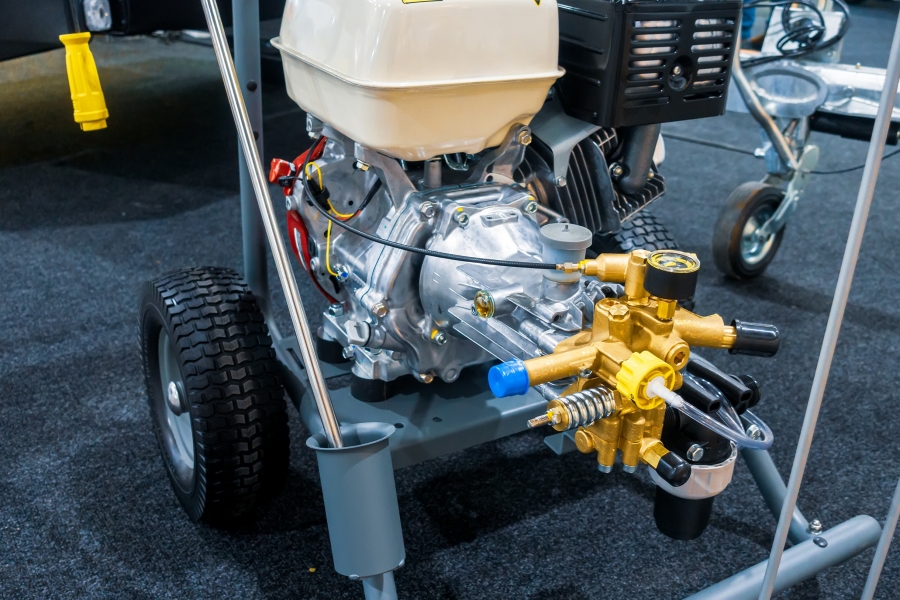
The difference comes down to pump speed. A direct drive pump connects straight to the motor shaft, spinning at the same speed the engine or motor runs, typically around 3400 RPM on gas models or 3450 RPM on standard electric motors. Belt drive pumps use a pulley system instead, which lets them spin at a fraction of that speed, usually 900 to 1400 RPM. That single difference in speed drives almost every practical difference between the two, including heat, vibration, and how long the internal seals hold up.
Here's how the two drive systems compare:
- Direct drive: compact footprint, lower upfront cost, spins at engine speed
- Belt drive: larger footprint, higher upfront cost, spins at a fraction of engine speed
For most buyers, one factor matters more than anything else: how many hours the machine runs each week.
How Duty Cycle Affects Commercial Pressure Washer Pump Life
Duty cycle, how many hours the machine runs each week, should matter more than the purchase price when choosing between a belt drive vs direct drive pressure washer. Direct drive pumps hold up well for occasional use, cleaning equipment, vehicles, or a loading dock a few hours a week. Push that same pump past 15 to 20 hours a week, and the higher RPM wears seals and bearings faster than a belt drive pump running at a fraction of the speed. Fleet operators, agricultural facilities, and food processing plants that wash daily often spend less over five years on a belt drive pump, even with the higher upfront cost.
Can a Belt Drive Pressure Washer Pull Water From a Tank?
Pump speed matters here for a practical reason, not only a mechanical one. Direct drive pumps spin too fast to draw water efficiently from an unpressurized tank, so they generally need a garden hose or municipal supply feeding the inlet under some pressure. Belt drive pumps spin slowly enough to pull water from a tank on their own, which matters for job sites, ranches, or rural properties across eastern Colorado and Wyoming without a hookup nearby. For many of those operations, that single requirement decides which drive type makes the most sense.
What Does Each Drive Type Cost Over Time?
Cost often starts with the belt drive vs direct drive pressure washer decision, though it should not end it. A direct drive unit typically costs several hundred dollars less upfront, which is why it dominates the lower end of the commercial market. On a typical industrial pump, the purchase price makes up only about 10 percent of the total ownership cost over a 15-to-20-year lifespan, and a belt drive pump's slower operating speed usually means fewer rebuilds along the way. Belt drive systems add one recurring cost direct drive skips entirely: belts stretch and need periodic tension adjustment, though that expense is minor next to a full pump rebuild.
How to Choose the Right Belt Drive vs Direct Drive Pressure Washer
Matching the pump to your duty cycle helps avoid paying for durability you don't need or replacing worn components sooner than expected. From enclosed wash bays to food processing and manufacturing facilities, Interstate Energy helps businesses select electric pressure washers designed for safe, reliable indoor operation.
Contact us today to discuss your duty cycle, water source, and cleaning schedule, and we'll help you choose the drive system that fits your operation.